French Beef Stew: A Timeless Comfort Food Classic
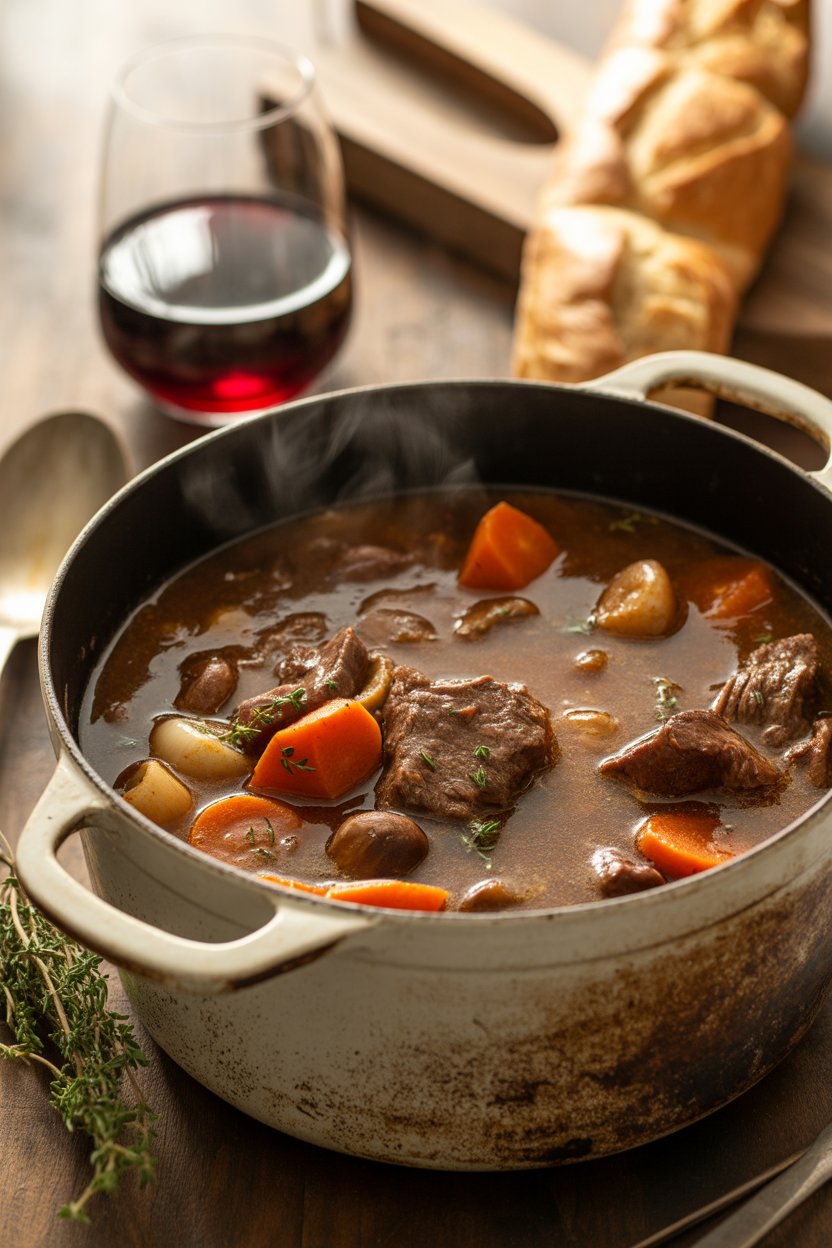
When the weather turns crisp and you’re craving something deeply satisfying, nothing quite compares to a rich, aromatic French Beef Stew simmering on your stovetop. This beloved dish, known in France as “boeuf bourguignon” or simply “ragout de boeuf,” represents the pinnacle of comfort cooking – transforming humble ingredients into something truly extraordinary through patience, technique, and the magic of slow cooking.
French cuisine has long been celebrated for its ability to elevate simple ingredients into sophisticated dishes, and beef stew exemplifies this philosophy perfectly. Unlike quick weeknight meals, this dish rewards those who understand that great flavor takes time to develop, creating layers of taste that simply cannot be rushed.
The Rich History Behind French Beef Stew
French Beef Stew has its roots deeply embedded in the pastoral traditions of rural France, where resourceful home cooks learned to transform tough cuts of beef into tender, flavorful meals. Originally developed as a way to make the most of less expensive cuts of meat, this dish became a cornerstone of French home cooking, passed down through generations of families who understood the value of slow, careful preparation.
The technique of braising – cooking meat slowly in liquid – allowed French cooks to break down the tough connective tissues in beef chuck or shoulder, creating incredibly tender results while infusing the meat with complex flavors from wine, herbs, and aromatics. This method became so refined in French kitchens that it eventually influenced cooking techniques worldwide.
What makes French beef stew particularly special is its emphasis on building layers of flavor. The initial searing of the beef, the careful sautéing of aromatic vegetables, the deglazing with wine, and the long, gentle simmer all contribute to a final dish that’s far greater than the sum of its parts.
Essential Ingredients for Authentic French Beef Stew
Creating an exceptional French Beef Stew begins with selecting the right ingredients, each playing a crucial role in the final dish’s success. The foundation starts with the beef itself – chuck roast or beef shoulder are ideal choices because their marbling and connective tissue break down beautifully during the long cooking process, becoming incredibly tender while adding body to the sauce.
Quality wine serves as both a cooking liquid and flavor enhancer, traditionally using Burgundy or another full-bodied red wine. The wine not only tenderizes the meat but also contributes depth and complexity that water simply cannot provide. Don’t cook with wine you wouldn’t drink – the flavors concentrate during cooking, so quality matters significantly.
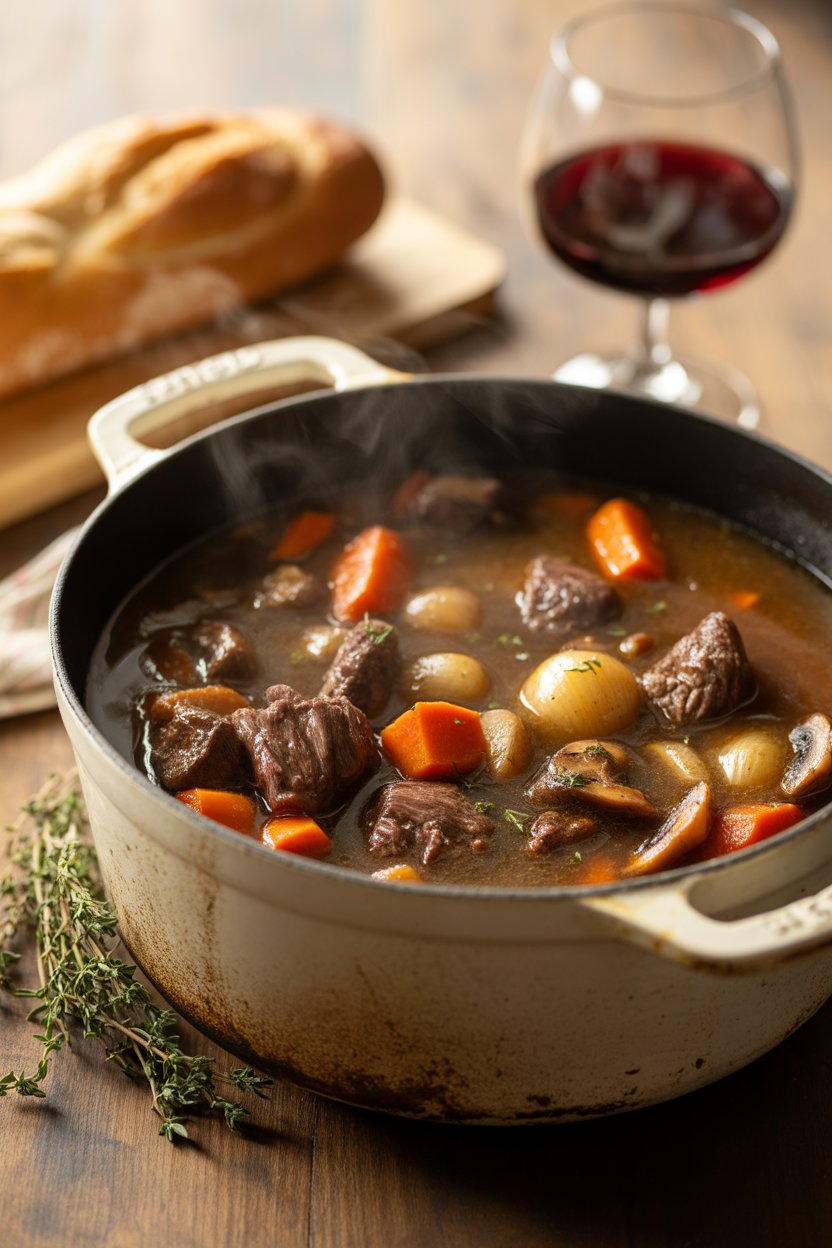
The aromatic base, known as mirepoix in French cooking, consists of onions, carrots, and celery, diced and slowly cooked until softened. These vegetables provide natural sweetness and create the flavor foundation upon which the entire dish is built. Fresh herbs like thyme, bay leaves, and parsley add aromatic complexity, while tomato paste contributes umami depth and helps thicken the sauce naturally.
Mushrooms, particularly button or cremini varieties, add an earthy richness that complements the beef beautifully. Some recipes include pearl onions for additional texture and sweetness, while bacon or pancetta can provide a smoky undertone that enhances the overall flavor profile.
Step-by-Step Preparation Techniques
The key to outstanding French Beef Stew lies in understanding each preparation step and why it matters. Begin by cutting your beef into uniform pieces, approximately two-inch cubes, and patting them completely dry. Moisture is the enemy of proper browning, and that golden-brown sear is crucial for developing the deep flavors that distinguish great stew from ordinary versions.
Season the beef generously with salt and pepper, then dredge lightly in flour. This flour coating serves multiple purposes – it helps achieve better browning, protects the meat during cooking, and eventually helps thicken the stewing liquid. Heat a heavy-bottomed Dutch oven or large pot over medium-high heat and add a small amount of oil with a high smoke point.
Brown the beef in batches, never overcrowding the pan, which would cause the meat to steam rather than sear. Each piece should develop a rich, caramelized exterior before being removed and set aside. This browning process, called the Maillard reaction, creates hundreds of flavor compounds that form the backbone of your stew’s taste.
After browning the beef, reduce the heat and add your diced vegetables to the same pot, allowing them to cook in the flavorful fond left behind by the meat. This deglazing process captures all those concentrated flavors and incorporates them into the vegetable base. Cook the vegetables until they’re softened and beginning to caramelize slightly, typically 8-10 minutes.
Mastering the Slow Cooking Process
Once your vegetables are properly prepared, it’s time to build the braising liquid that will transform your ingredients into a cohesive, flavorful dish. Add tomato paste to the vegetables and cook for another minute, allowing it to darken slightly and develop deeper flavors. This brief cooking eliminates any raw taste and concentrates the tomato’s natural sweetness.
Pour in your wine gradually, scraping up any browned bits from the bottom of the pot with a wooden spoon. These caramelized particles, called fond, contain concentrated flavors that are essential to the stew’s final taste. Allow the wine to simmer for a few minutes to cook off the harsh alcohol while retaining the wine’s flavor complexity.
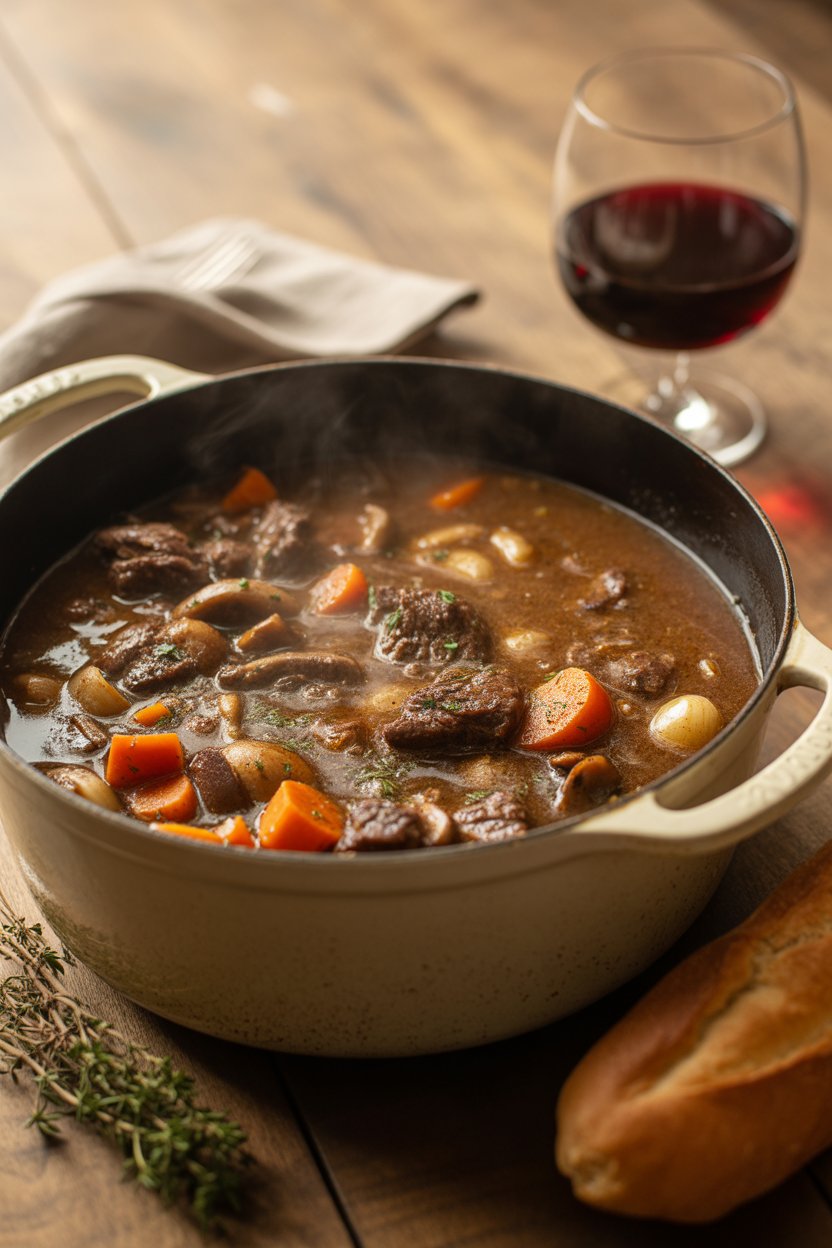
Return the browned beef to the pot along with any accumulated juices, then add enough beef stock to barely cover the meat. The liquid level is crucial – too much will dilute the flavors, while too little may cause the stew to dry out during the long cooking period. Add your herb bundle, typically bay leaves and fresh thyme tied together for easy removal later.
Bring the mixture to a gentle simmer, then either continue cooking on the stovetop at the lowest heat setting or transfer to a preheated oven at 325°F. The oven method provides more consistent, gentle heat that’s ideal for long braising. Cover the pot with a tight-fitting lid and allow the magic to happen over the next 2-3 hours.
Flavor Variations and Regional Adaptations
While traditional French Beef Stew follows classic techniques, there’s room for creative interpretation that can complement your personal taste preferences or available ingredients. Some regions of France add different vegetables – parsnips provide earthiness, while turnips contribute a subtle peppery note. Root vegetables like these pair beautifully with beef and can add interesting textural variety to your finished dish.
For those interested in exploring other hearty stew options, consider trying Moroccan Chicken Stew which offers exotic spices and dried fruits, or Cajun Potato Soup for a completely different but equally satisfying comfort food experience.
Wine selection can dramatically impact your stew’s final character. While Burgundy remains the traditional choice, Côtes du Rhône, Cabernet Sauvignon, or even a robust Malbec can provide interesting flavor variations. Some cooks prefer adding a splash of brandy or cognac near the end of cooking for additional depth and complexity.
Herb variations can also personalize your stew. While thyme and bay leaves are traditional, rosemary adds a piney fragrance, while oregano provides a more Mediterranean character. Fresh herbs added just before serving brighten the entire dish and provide aromatic contrast to the rich, slow-cooked flavors.
Serving Suggestions and Perfect Pairings
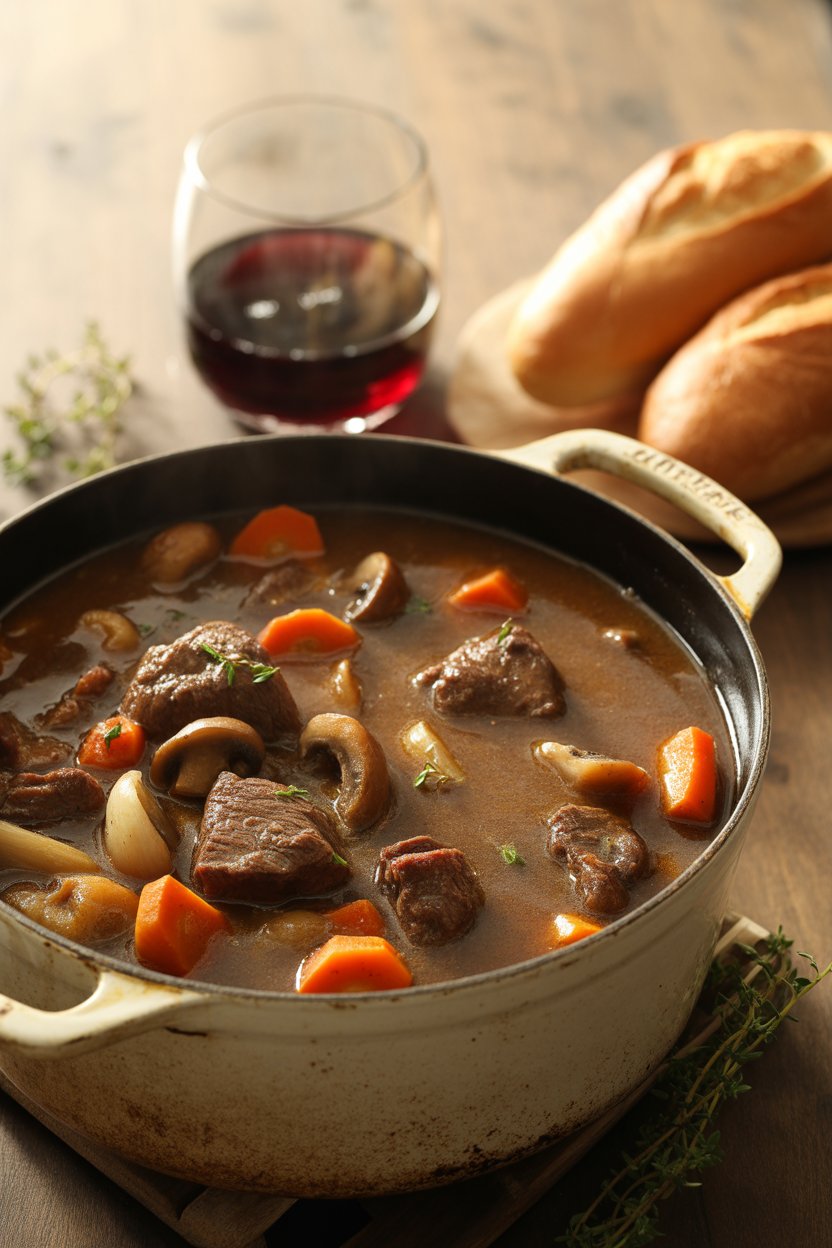
French Beef Stew shines when served with accompaniments that complement its rich, wine-infused flavors without competing for attention. Traditional pairings include creamy mashed potatoes, which provide a neutral canvas for the flavorful sauce, or crusty French bread for soaking up every drop of the delicious braising liquid.
For a more elegant presentation, consider serving over buttery egg noodles or polenta, both of which absorb the stew’s flavors beautifully while adding their own subtle taste and texture. Rice also works wonderfully, particularly if you’re looking for a gluten-free option that won’t overpower the stew’s complex flavors.
Fresh herbs make an excellent garnish – chopped parsley adds color and freshness, while chives provide a mild onion flavor that complements the cooked aromatics in the stew. A dollop of sour cream or crème fraîche can add richness and tang, though the stew is certainly satisfying on its own.
Wine pairing becomes interesting since your stew already contains wine. Generally, serve the same type of wine you used for cooking, or choose something with similar body and character. A medium-bodied red wine with good acidity will cut through the richness while harmonizing with the existing flavors.
Storage, Reheating, and Make-Ahead Tips
One of French Beef Stew’s greatest advantages is how beautifully it improves with time, making it perfect for meal planning and entertaining. The flavors continue developing even after cooking stops, often tasting even better the next day after all the ingredients have had time to meld together completely.
Store leftover stew in the refrigerator for up to four days, or freeze portions for up to three months. When freezing, consider using individual serving containers for convenient weeknight meals. The stew reheats beautifully on the stovetop over low heat, though you may need to add a splash of stock or water if the sauce has thickened too much during storage.
For make-ahead preparation, you can brown the beef and prepare the vegetable base up to two days in advance, storing them separately in the refrigerator until ready to combine and finish cooking. This approach allows you to do the more labor-intensive preparation when convenient, then simply combine everything for the long simmer when you’re ready.
The stew also freezes well after complete cooking, though root vegetables may become slightly softer after thawing. If you plan to freeze your stew, consider slightly undercooking any vegetables you add, as they’ll continue cooking during the reheating process.
Troubleshooting Common Issues
Even experienced cooks occasionally encounter challenges when making French Beef Stew, but most issues have simple solutions. If your meat remains tough after the recommended cooking time, continue simmering – some cuts simply need longer to break down completely. Patience is key with braised dishes, and it’s nearly impossible to overcook beef stew as long as you maintain gentle heat and adequate liquid.
Thin sauce can be thickened by removing the lid during the final 30 minutes of cooking, allowing excess liquid to evaporate. Alternatively, mix a tablespoon of cornstarch with cold water and stir into the simmering stew, cooking for a few additional minutes until thickened to your liking.
If your stew tastes flat or lacks depth, consider your seasoning levels – salt enhances all other flavors and may need adjustment at the end of cooking. A splash of additional wine, a teaspoon of tomato paste, or even a small amount of beef base can intensify the overall flavor profile.
For those looking to explore other comforting slow-cooked options, French Onion Chicken Soup offers similar depth of flavor with different ingredients, while Sweet Potato Chicken Chili provides a completely different but equally satisfying comfort food experience.
Conclusion: Embracing the Art of Slow Cooking
French Beef Stew represents more than just a recipe – it’s an invitation to slow down and appreciate the transformative power of patient cooking. In our fast-paced world, taking the time to properly brown meat, build flavor layers, and allow ingredients to slowly meld together becomes almost meditative, creating not just a meal but an experience.
This classic dish teaches us valuable lessons about cooking technique while delivering incredible satisfaction with every spoonful. The combination of tender beef, rich sauce, and perfectly cooked vegetables creates a harmony that epitomizes comfort food at its finest. Whether you’re cooking for family dinner or entertaining guests, French Beef Stew never fails to impress and satisfy.
The beauty of mastering this dish lies in understanding that great cooking doesn’t always require exotic ingredients or complex techniques – sometimes the most memorable meals come from simple ingredients treated with respect and patience. Once you’ve experienced the deep satisfaction of creating this classic French stew, you’ll find yourself returning to it again and again, each time discovering new nuances and appreciating the timeless appeal of this remarkable dish.